
Last updated
How Do Porta Potties Work?
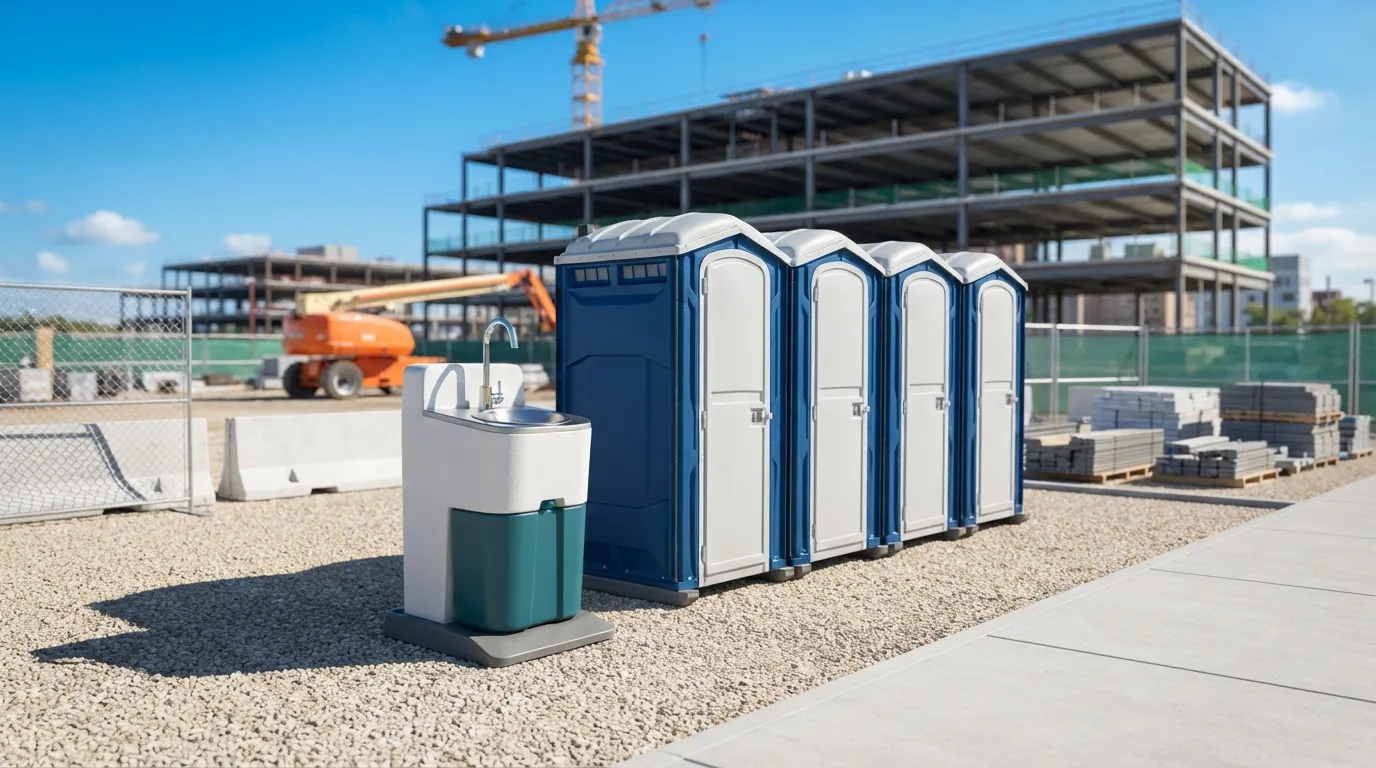
The basic design hasn't changed much in decades. A molded plastic shell sits over a holding tank, and the seat has a trap door or flap that opens straight into that tank. There's no water involved, which is why a standard porta potty rental doesn't need a hookup or a drain line. A standard unit runs about 44 by 48 inches on the ground and stands roughly 92 inches tall, so it fits into tight jobsite corners without eating much space. Inside, the chemical mix does the real work: it breaks down waste, knocks back odor, and keeps things from foaming during transport. When the tank fills up, a technician pumps it out through a valve on the back, rinses if needed, and restocks toilet paper and sanitizer. For a construction crew of 20 or fewer, OSHA 1926.51(c) sets the baseline at one toilet facility, which is the number most Spokane contractors plan around before they even call for a quote. If you're trying to figure out how many units your crew or event needs, the porta potty placement guide walks through the math, and how many porta potties do I need breaks it down by headcount and hours worked.
How Does a Flushable Porta Potty Work?
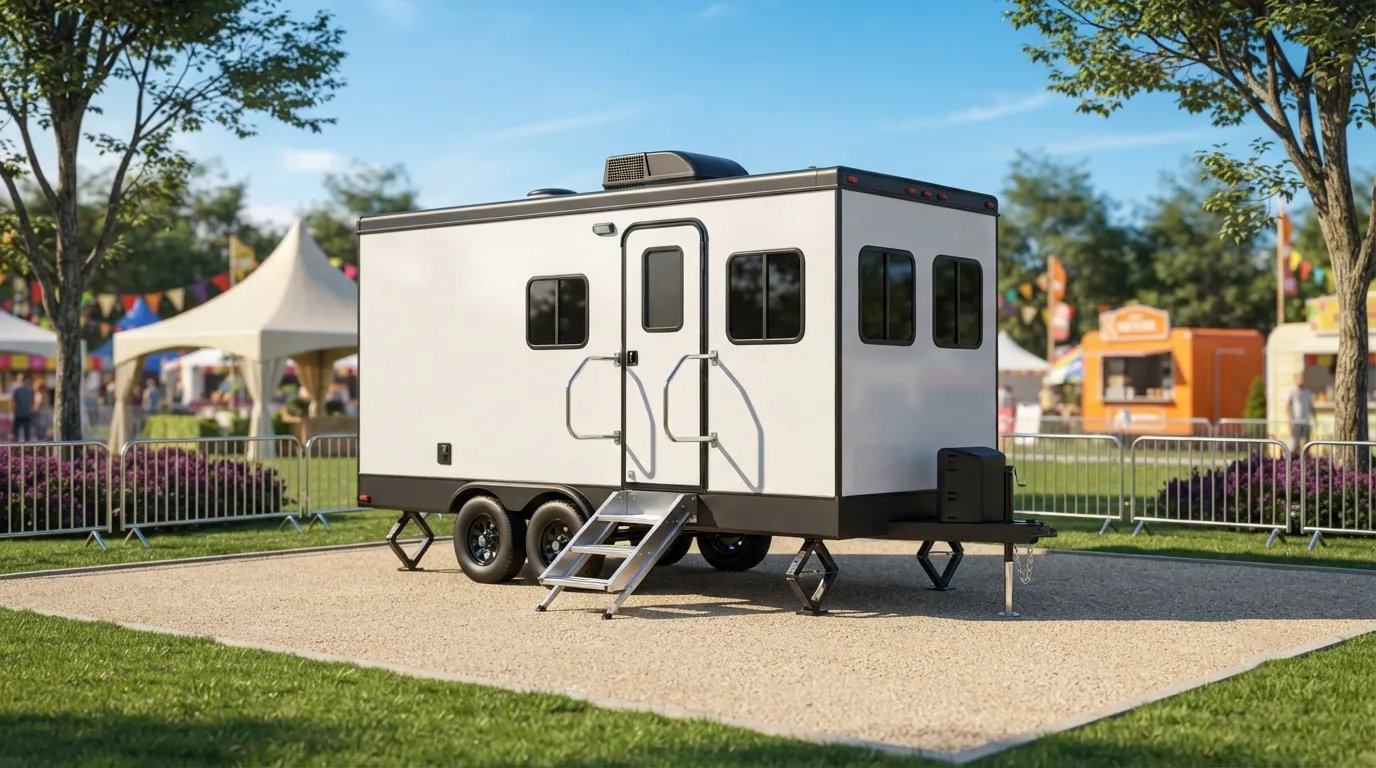
A flushable unit, sometimes called a deluxe model, adds a small onboard freshwater tank and a foot pump or hand pump that pushes a rinse of water through the bowl after each use. It still drains into the same kind of holding tank underneath, just with a cleaner flush cycle and less odor buildup between services. The deluxe flushable porta potty option is popular for weddings and higher-end events around Spokane where guests expect something closer to a real bathroom. Some deluxe trailers step further up, with sinks, mirrors, and interior lighting built into a climate-controlled shell, which is where a restroom trailer rental or a luxury restroom trailer comes in for bigger jobs. ADA units work the same core way but add space: ADA Standards 304.3.1 calls for a 60 inch turning circle inside, and the doorway has to clear 32 inches per ADA Standards 404.2.3. An ADA accessible porta potty also needs a grab bar layout and a forward reach that stays inside 48 inches high and 15 inches low under ADA Standards 308.2.1. If you're clustering units on a site, ADA Standards 213.2 requires at least 5 percent of them to be accessible units, never fewer than one.
How Does a Portable Sink Work?
A portable handwashing station runs on the same no-plumbing logic as a porta potty. It has a freshwater tank up top, usually gravity-fed or foot-pump activated, and a gray water tank below that catches the runoff. Soap dispenser, paper towel roll, done. Under 29 CFR 1910.141(d)(2), a washing setup has to include soap and a way to dry hands, so hand sanitizer alone doesn't satisfy that requirement on a jobsite. A handwashing station rental or portable sink rental gets paired with toilets on most Spokane construction sites for exactly that reason. There's a separate rule worth knowing: OSHA 1926.51(f)(1) requires washing facilities specifically where workers apply paints, coatings, herbicides or insecticides, since those jobs leave contaminants on the skin that soap and water need to remove. That's different from general sanitation. If your crew works with those materials, check the handwashing requirements page before your next inspection. Farms have their own standard too, OSHA 1928.110, which calls for water and handwashing access within a quarter mile of hand-labor employees.
How Do Camping Porta Potties Work?
Camping and event units work the same as jobsite ones, just serving foot traffic instead of a fixed crew. At a festival or fairground, a camping porta potty sees heavier, more irregular use, so techs service them more often than the standard once-a-week baseline. That baseline itself comes from ANSI/PSAI Z4.3, which sets one service visit per week for up to 10 users over a 40 hour week, a number built for offices and small crews, not weekend crowds. Bigger draws, like a festival restroom rental setup or a concert restroom rental block, usually mean multiple visits a day. Spokane events near Town and Country, about 4.6 miles north of downtown, or out toward Cheney, 17.4 miles southwest, still fall under the same delivery logistics: trucks need roughly 60 feet of straight clearance behind them to position and pump a unit. That clearance matters just as much for a roll-off dumpster rental delivery as it does for a bank of toilets at a golf outing or a county fair restrooms setup.
Do porta potty chemicals affect septic systems?
No, they're built for holding tanks, not septic fields. Porta potty deodorizer breaks down waste inside a sealed tank meant for pump-out disposal, while a residential septic tank relies on bacteria, gets pumped with septic tank cleaning chemicals or enzyme treatments rather than the blue deodorizer used in a portable toilet, and typically needs pumping every 3 to 5 years. Mixing the two systems isn't how either is designed to work, and searching portable toilet chemicals near me will turn up a different supplier than one selling septic tank cleaning chemical products for a home system.
Why does a construction worker run to a porta potty instead of using an indoor bathroom?
Most job sites don't have finished plumbing yet, so a portable unit is the only option, and a construction worker running to a porta-potty between tasks is just how a site without indoor bathrooms actually functions. OSHA 1926.51(c) sets minimum toilet counts by crew size specifically because construction sites lack fixed facilities most of the time.
How often do porta potties get pumped in Spokane?
Standard service follows a weekly baseline under ANSI/PSAI Z4.3, though busy sites or events often need more frequent visits. Grease interceptors follow a different rule entirely, getting pumped once fats, oils, grease and solids hit 25 percent of liquid depth.
Can I rent just a handwashing station without toilets?
Yes, a lot of food vendors and small crews do exactly that. Check the hand sanitizer station rental page too, though remember it doesn't replace soap-and-water washing under 29 CFR 1910.141(d)(2) for most job categories.
Is a chemical toilet the same as a flushable one?
Not quite. A standard chemical toilet has no water and relies fully on deodorizer in the tank, while a flushable model adds a small water reservoir and pump for an actual rinse cycle before waste drops into the same kind of holding tank below. Picture how do flushable porta potties work as a simple diagram: pump handle up top, water line down to the bowl, waste dropping through the same trap door into the tank underneath, same as any how do porta potties work diagram you'd find explaining the standard model.
Next step
Get a delivery date
Tell us the address, the dates and the headcount. We size the order and confirm the route.